



80% of the current discussion is technical in nature and based on cost-benefit models and statistics, says the Economy Secretary
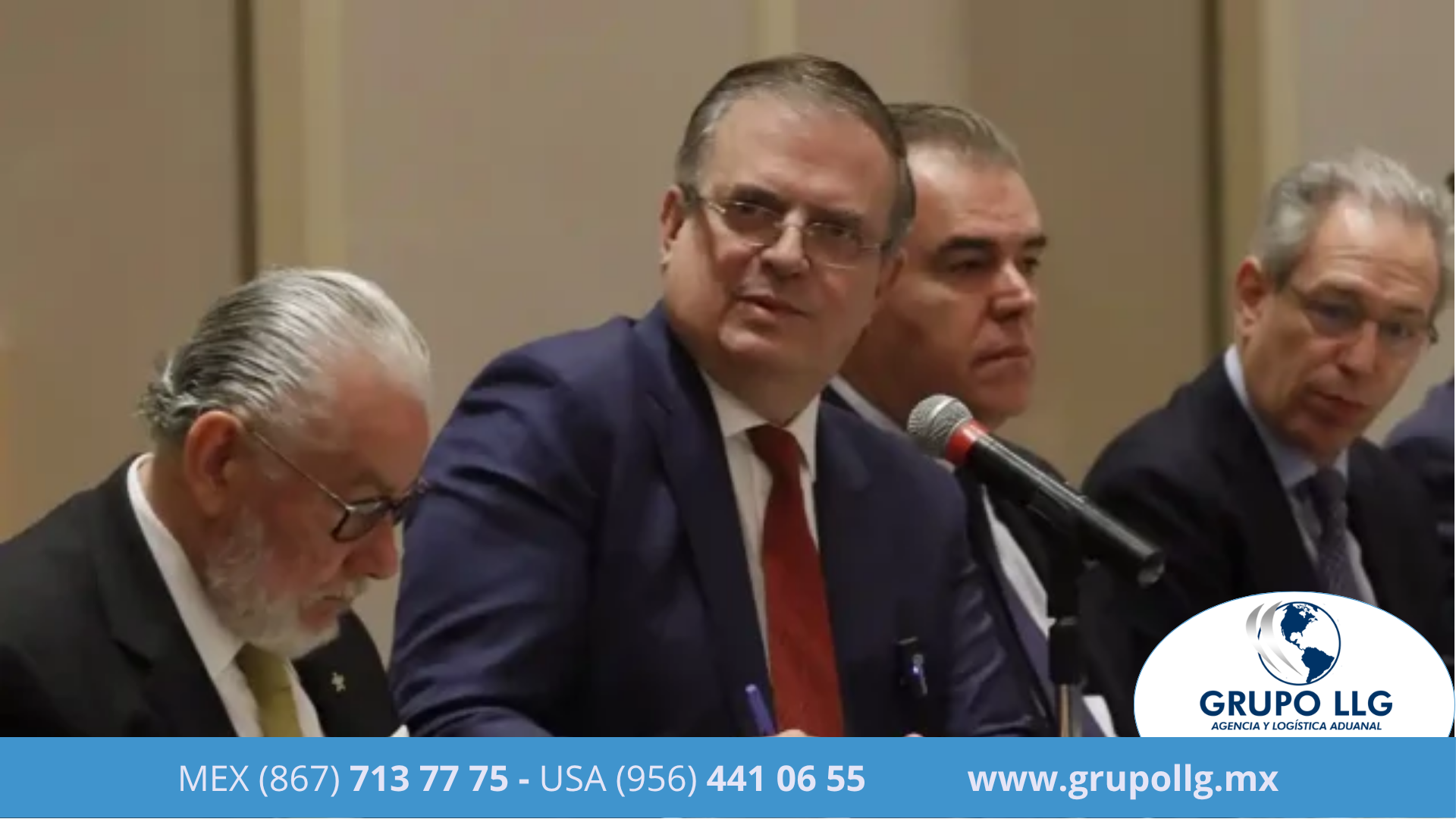
Economy Secretary Marcelo Ebrard expressed confidence that by November, “the largest possible number of issues that could constitute an obstacle or a controversy” for the USMCA will have been resolved, ahead of the formal review scheduled for 2026.
“We will seek to reach the month of November having removed from the table as many issues as possible that could represent an obstacle, an irritant, or a controversy when we sit down to properly conduct the review of the agreement—that is the ultimate goal,” he stated.
The official estimated that 80% of the current discussion is technical in nature and based on cost-benefit models and statistics, which will serve as the foundation for all negotiations.
He assured that the trade agreement will endure to strengthen commerce in North America, despite the renegotiation and review process being difficult and carrying certain risks.
“We have to navigate many risks, and it will be a difficult review, but the agreement will survive,” he told business leaders who are members of the Business Coordinating Council (CCE).
He stated that the review of the USMCA is advancing in a coordinated manner among the three countries, and that the central goal of the government is to reduce the impact of unilateral tariffs imposed by the United States.
Before the CCE assembly, he explained that at the beginning of the year, the scenario included risks of trade rupture or fragmented renegotiations. However, he affirmed that Mexico managed to initiate an orderly and joint review process with Washington and Ottawa.
“We are at the beginning of a coordinated review process with the United States and Canada, and that is no small thing,” he emphasized.
‘There has never been a fully trilateral negotiation’
Ebrard noted that during the previous negotiation that gave rise to the USMCA, there were both bilateral and trilateral issues, meaning that “there has never been a negotiation that was fully trilateral all the time; there are many issues that are very specific to Mexico and the United States, and many others that concern Canada and the United States.”
“If Canada is going to buy F-35 aircraft, we are not going to be at that negotiation table,” he pointed out.
“Canada exports energy to the United States, but we import energy from the United States. In short, there are a number of differences in the topics. Now there are some in the United States suggesting that we focus on a more bilateral relationship. Ultimately, the agreement belongs to all three countries, recognizing that we each have different bilateral agendas,” he said.
The official explained that an agreement was reached with the Office of the U.S. Trade Representative (USTR) and the Canadian government to begin parallel consultations, each under the mechanisms specific to their political systems.
Ebrard defends barriers on Chinese products
Marcelo Ebrard also defended the proposal sent to Congress to adjust the national tariff policy in order to curb the growing trade deficit, especially with China.
“We cannot allow the deficit to keep growing as it is—it impacts our productive sector,” he said, while clarifying that it is not about changing all foreign trade policies.
Finally, he emphasized that Mexico must remain flexible in response to the evolution of trade policy between the United States and China, while maintaining the permanent goal of preserving favorable competitive conditions.
https://forbes.com.mx/