



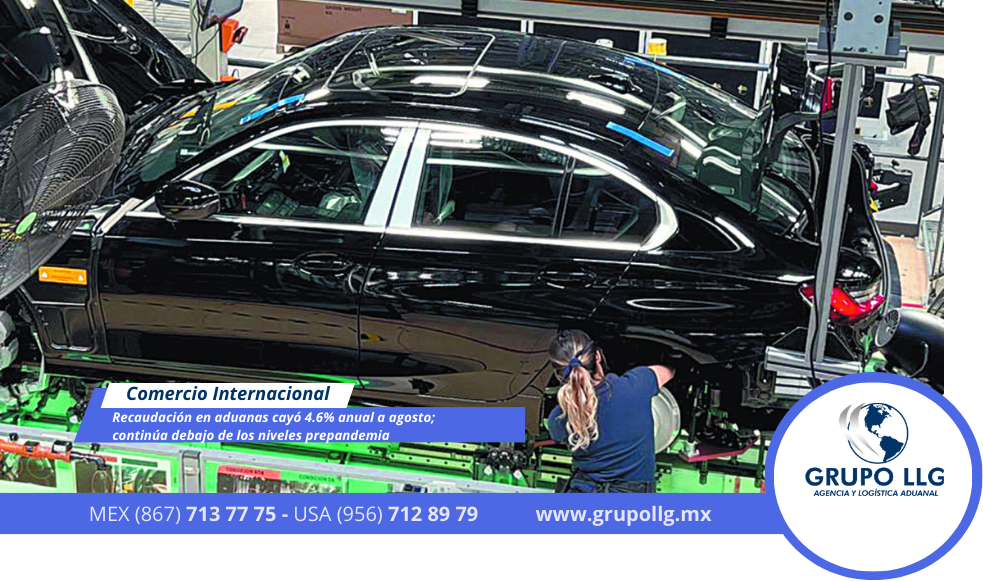
The automotive industry generates 4.7% of the national GDP and 21.7% of the manufacturing GDP.
The Mexican automotive industry already has the required level in the T-MEC of 75% of working conditions, with respect to labor human rights and freedom of association, with which there is full certainty for the Mexican side to start negotiations towards review of the treaty in 2026, and with this the possibility of a controversy on the matter is consummated.
During the presentation of the diagnosis on the labor situation in the automotive sector in Mexico, which evaluated the implementation of the Labor Reform and chapter 23 of the Treaty between Mexico, the United States and Canada (T-MEC) in 261 companies from various regions of the country , it was highlighted that “75% of the companies legitimized their collective bargaining contracts, with the automotive and auto parts sector being the one with the highest percentage of legitimized contracts.”
Furthermore, “92% of companies in the sector improved their knowledge of labor legislation, while 20% still report incidents of workplace violence.”
The general director of the organization, Gabriel Padilla, announced that before 2026, the automotive industry will comply with 90% of the required labor standards to eliminate any suspicion of disputes with business partners.
“The objective of this study is not only to measure the level of compliance with the Labor Reform and Chapter 23 of the T-MEC, but also to identify areas of opportunity to build a fairer, more inclusive and competitive industry. Thanks to the support of the United States Department of Labor, we have designed training programs at no cost, based on evidence and focused on the real needs of the sector,” commented Valeria Uribe, national director in Mexico of the Pan American Development Foundation (PADF). ).
“This sector not only generates 4.7% of the national GDP and 21.7% of the manufacturing GDP, but has also demonstrated that compliance with labor rights is not a cost, but a strategic investment that strengthens our global position,” stated the director of the INA.